

Guide 01 · Selection
How to Choose a Commercial Refrigerator by Industry (2026 B2B Guide)
Match your industry — restaurant, retail, pharmacy, lab, hotel — to the right commercial refrigerator. Compare cabinet types, temperature classes and specs in one guide.
On this page (15)
- Quick Answer
- Why Industry Fit Matters More Than Brand
- Industry-by-Industry Selection Matrix
- 1. Restaurants and Food Service
- 2. Supermarkets and Grocery Retail
- 3. Convenience Stores
- 4. Hotels and Hospitality
- 5. Pharmacies and Healthcare
- 6. Laboratories and Research
- 7. Bakeries and Confectionery
- 8. Florists and Fresh Produce
- How to Verify a Supplier's Claim
- Common Selection Mistakes
- FAQ
- References & standards cited
Quick Answer
Choose a commercial refrigerator by matching the cabinet type to your industry's product mix, temperature requirement, and service pattern. Restaurants need reach-in and prep-table units; supermarkets need display cases and island freezers; pharmacies and labs need precision units with temperature logging and validated uniformity. The wrong cabinet type wastes energy, fails inspection, and shortens equipment life — even when the temperature number on the display looks correct.
Why Industry Fit Matters More Than Brand
A commercial refrigerator is not a generic appliance. The same "upright chiller" spec can mean a glass-door merchandiser for a convenience store, a solid-door reach-in for a restaurant kitchen, or a validated unit for a vaccine store. These three machines share a footprint but differ in airflow design, door construction, temperature uniformity, and compliance documentation.
Buyers who select on brand or price alone commonly hit three problems:
- Temperature class mismatch. A chiller rated for +2 to +8 °C cannot hold frozen food at −18 °C, regardless of how low the dial goes.
- Duty-cycle failure. Display cabinets opened 80 times an hour need different evaporator sizing and defrost logic than a back-room unit opened five times a day.
- Compliance gaps. A pharmacy or lab unit without temperature logging, alarm, and mapped uniformity will fail audit even if it holds the right temperature.
This guide maps each major industry to the cabinet types that actually work in it.
Industry-by-Industry Selection Matrix
| Industry | Primary cabinet types | Typical temperature | Critical spec | Common mistake |
|---|---|---|---|---|
| Restaurants & food service | Reach-in chiller/freezer, prep table, under-counter, blast chiller | +2–+8 °C / −18 °C | Door cycle rating, stainless interior | Buying display case for kitchen storage |
| Supermarkets & grocery | Multideck, island freezer, glass-door merchandiser, cold room | +2–+8 °C / −18 °C | Climate class, linear metres per m² | Ignoring aisle and defrost heat load |
| Convenience stores | Glass-door merchandiser, small reach-in, beverage cooler | +2–+8 °C | Footprint, glass anti-fog | Over-specifying capacity, blocking airflow |
| Hotels & hospitality | Reach-in, under-counter, wine cooler, ice machine | +2–+8 °C / −18 °C | Noise level, finish, drainage | Ignoring front-of-house aesthetics |
| Pharmacies & healthcare | Pharmacy refrigerator, freezer, vaccine cabinet | +2–+8 °C / −25 °C | Temperature logging, alarm, uniformity | Using a commercial chiller for vaccines |
| Laboratories & research | Lab refrigerator/freezer, ultra-low freezer | +4 °C / −20 °C / −80 °C | Uniformity ±1–2 °C, data logger | No backup or alarm provision |
| Bakeries & confectionery | Reach-in, dough retarder, display case | −5 to +5 °C | Humidity control, provenance | Wrong humidity dries product |
| Florists & fresh produce | Open display case, humidified chiller | +2–+10 °C | Humidity, airflow velocity | High airflow wilts leaves |
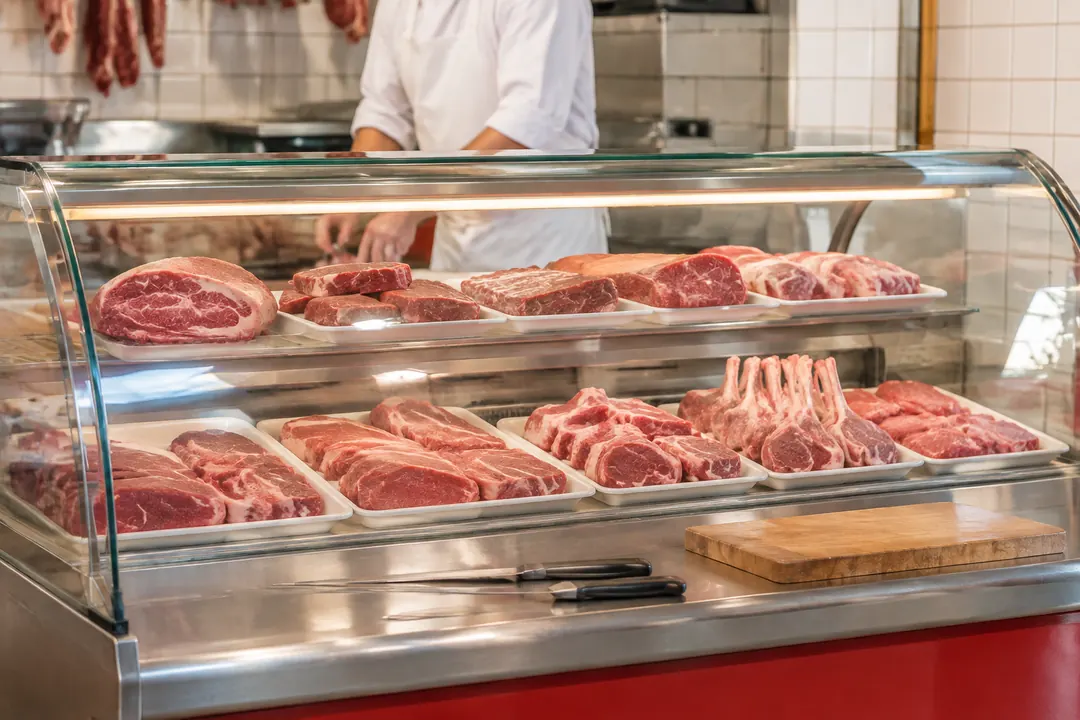
1. Restaurants and Food Service
Recommended: solid-door reach-in units, refrigerated prep tables, under-counter chillers, and blast chillers.
Kitchen refrigeration is defined by frequent door openings, high ambient temperature, and strict hygiene cleaning. Specify:
- Stainless steel interior and exterior (304 preferred) at splash and food-contact zones. Type 201 may be acceptable for dry outer panels but can pit under frequent chlorinated cleaning.
- Door cycle durability. Look for hinges rated for 100,000+ open/close cycles — a busy line can exceed 200 cycles a day.
- Forced-air evaporators with easy-clean coil access. Grease-laden air is the leading cause of coil fouling in kitchens.
- Blast chiller for cook-chill workflows. It reduces food from +70 °C to +3 °C within 90 minutes, meeting HACCP cooling requirements that a normal reach-in cannot achieve.
Avoid: glass-door merchandisers in a hot kitchen. They are designed for retail display, gain heat faster, and their glass fogs in high-humidity environments.
Material grade and refrigerant choice for these cabinets are covered in Commercial Refrigerator Materials and R290 vs R600a vs R490: Refrigerant Choice & Export Rules.
2. Supermarkets and Grocery Retail
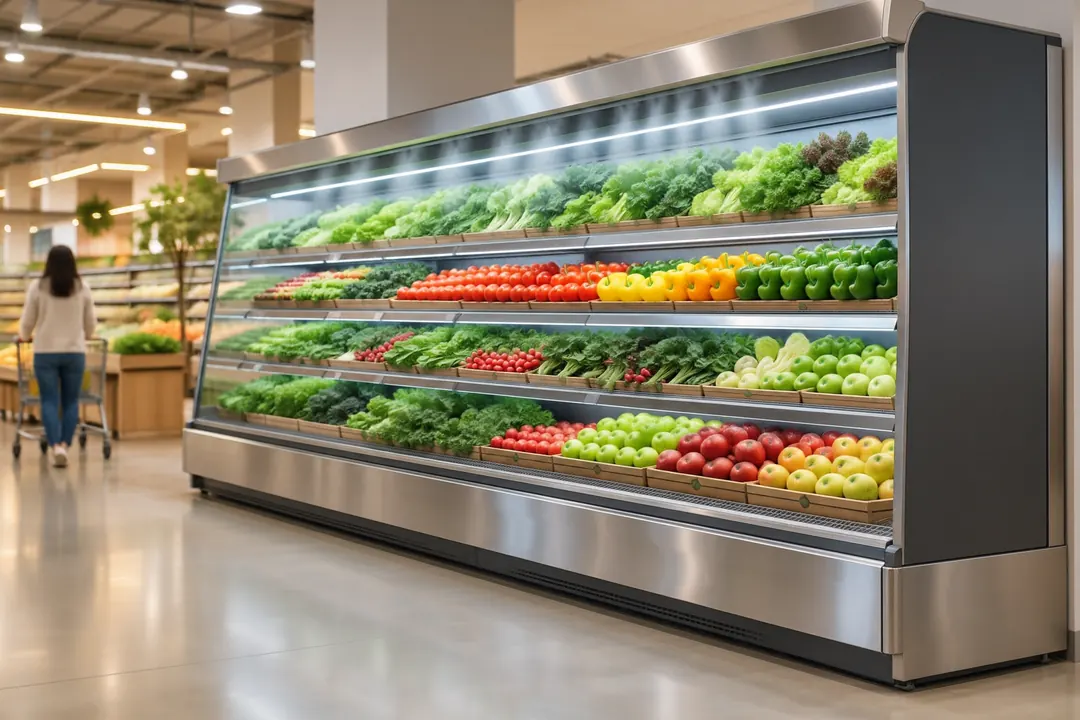
Recommended: multideck chillers, island freezers, glass-door upright freezers, and remote or plug-in cold rooms.
Supermarket refrigeration is a systems decision, not a unit purchase. The store is divided into temperature zones:
- Chilled zone (+2 to +8 °C): dairy, deli, prepared foods, fresh meat — multideck open cases and glass-door cabinets.
- Frozen zone (−18 °C or colder): island freezers and upright glass-door freezers.
- Back-of-house: cold rooms and walk-in freezers for stock rotation.
Two numbers drive the specification:
- Linear metres of display per m² of sales floor. Most shopfitters use 0.08–0.12 m of refrigerated case per m². A 500 m² store therefore needs roughly 40–50 linear metres of display.
- Climate class under ISO 23953-2. A case rated climate class 3 is tested at 25 °C / 60% RH. Specifying a class 3 case for an un-air-conditioned store in a hot market will result in product temperature drift.
Energy is the other decisive factor. Open multideck cases consume substantially more energy than glass-door cabinets — a trade-off between merchandise visibility and operating cost that should be calculated over a 10-year cabinet life, not at purchase.
Supermarkets are a systems decision rather than a unit purchase - the full zoning, sizing and procurement walkthrough is in Supermarket Refrigeration: Complete Selection Guide.
3. Convenience Stores
Recommended: glass-door merchandisers, beverage coolers, compact reach-ins.
Convenience stores optimise for impulse purchase and floor efficiency. Priorities:
- Glass-door over open case in air-conditioned stores — lower energy use and better temperature stability.
- Anti-fog / heated glass doors in humid climates to keep product visible.
- Narrow footprint (600–750 mm) with correct door swing clearance so a restock trolley can pass.
- LED lighting with low heat output to avoid adding load to the refrigeration system.
A common error is over-specifying capacity. A 300 L cabinet in a 20 m² store consumes more energy and occupies floor area that could hold higher-margin merchandise.
4. Hotels and Hospitality
Recommended: reach-in units for kitchens, under-counter units for bars, wine coolers and ice machines for guest areas.
Hotel refrigeration splits into back-of-house and front-of-house:
- Back-of-house: standard stainless reach-ins, same criteria as restaurants.
- Front-of-house: finish and noise matter. Electroplated or titanium-finished cabinets are often specified for premium bars and lounges; noise should be kept below ~50 dB(A) in guest-facing areas.
- Minibars: absorption or thermoelectric types are quiet but have limited cooling capacity; compressor minibars cool faster but need vibration isolation.
Wine storage is a separate category: 12–15 °C with 60–70% humidity and low vibration, not a standard refrigerator temperature.
5. Pharmacies and Healthcare
Recommended: dedicated pharmacy refrigerators and freezers with continuous monitoring.
This is the most compliance-driven category. A vaccine or medicine cabinet should provide:
- +2 to +8 °C chilled storage or −25 °C and below for frozen products, with uniformity typically within ±2 °C.
- Continuous temperature logging with a calibrated probe in a glycol bottle (not air) to represent product temperature.
- High and low alarms, plus a battery or remote alert for power failure.
- Validated installation qualification (IQ/OQ) documentation where required by local health authority.
- No auto-defrost cycle that raises product temperature beyond the validated range — many domestic-style units fail here.
A commercial food chiller is not a substitute. Even if it holds +4 °C on average, its temperature swings during defrost and lack of audit trail fail pharmaceutical GDP requirements.
6. Laboratories and Research
Recommended: lab refrigerators, lab freezers, and ultra-low temperature (ULT) freezers.
Lab storage is specified by uniformity and traceability, not just setpoint:
| Lab application | Target temperature | Uniformity requirement | Typical feature |
|---|---|---|---|
| Reagent storage | +4 °C | ±2 °C | Forced air, data logger |
| Sample freezer | −20 °C to −30 °C | ±3 °C | Manual defrost, backup alarm |
| Long-term biobank | −80 °C | ±5 °C | ULT freezer, cascade or Stirling cooling |
| Blood bank | +2 to +8 °C | ±1 °C | Dedicated blood-bank cabinet with alarm |
Specify external probe access ports, RS485/USB data export, and remote alarming. ULT freezers should have a backup power plan and a documented sample-transfer procedure.
7. Bakeries and Confectionery
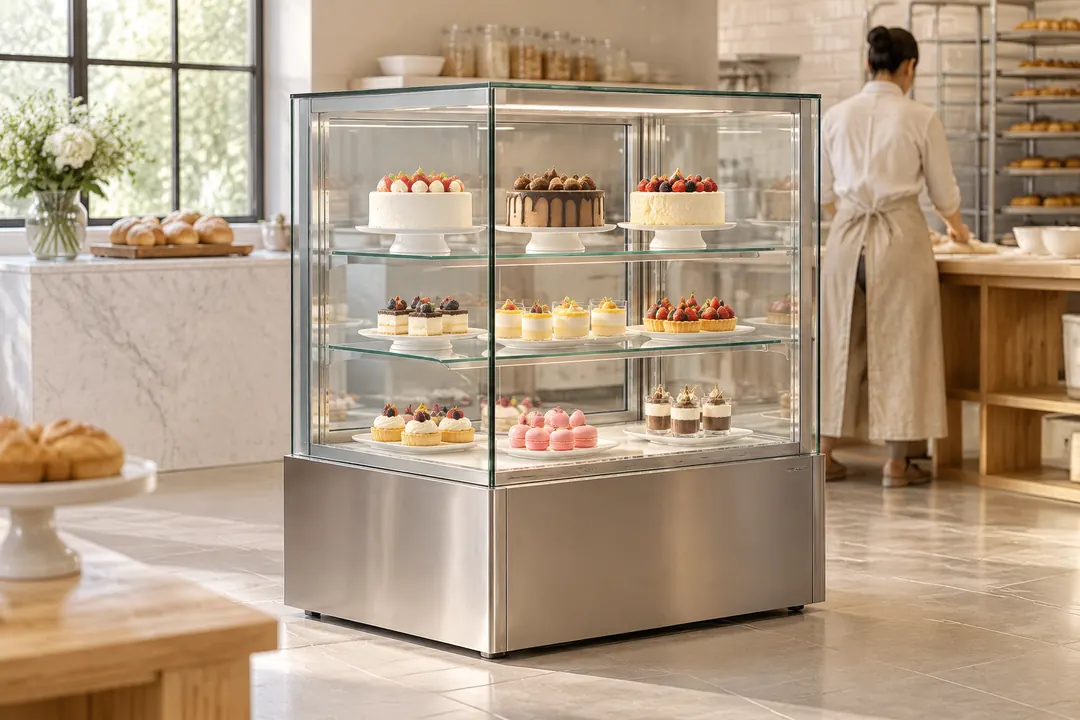
Recommended: reach-in chillers, dough retarders, and humidity-controlled display cases.
Dough retardation requires −5 to +5 °C with controlled humidity to slow fermentation without drying the surface. Confectionery display needs low humidity to prevent sugar bloom. These are opposite requirements — a single cabinet cannot serve both well.
Select by product:
- Bread and pastry display: moderate humidity, moderate airflow.
- Chocolate and confectionery: low humidity (<50% RH), stable +15–18 °C.
- Fresh cream cakes: +2 to +6 °C with gentle airflow to avoid surface drying.
8. Florists and Fresh Produce
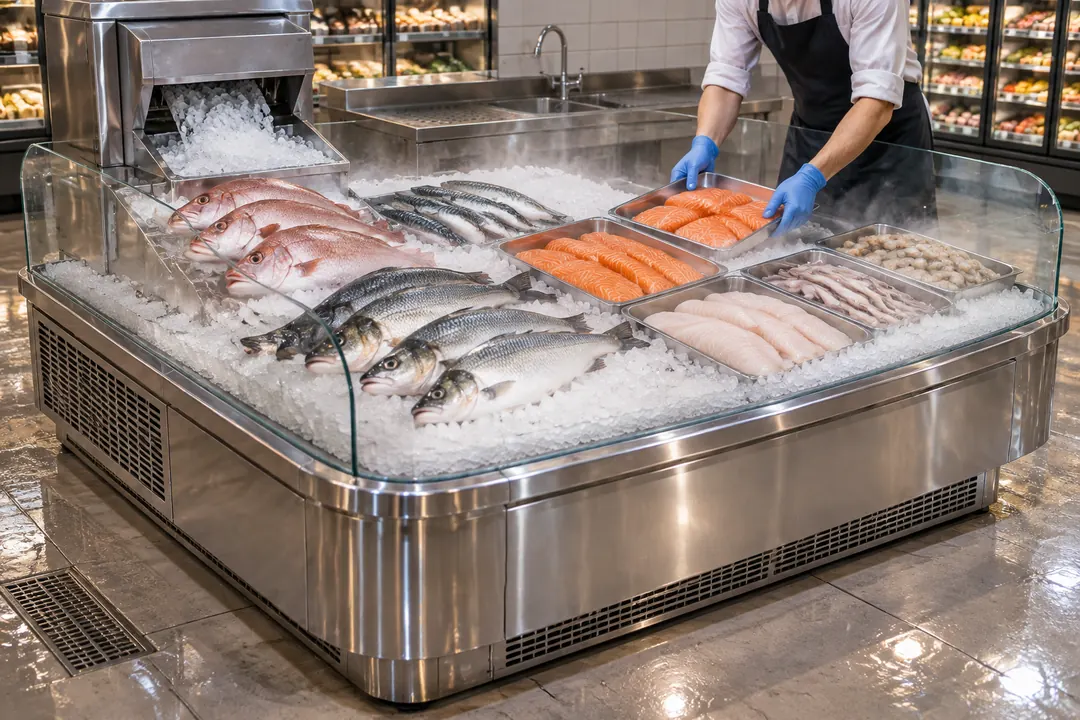
Recommended: humidified display cases and low-velocity chillers.
Cut flowers and leafy produce lose moisture through transpiration. High-velocity airflow that is fine for meat cases will wilt flowers in hours. Specify:
- Relative humidity 85–95% (with humidity generators or covered display).
- Low air velocity across product.
- +2 to +10 °C, avoiding chilling injury for tropical flowers (which prefer 10–15 °C).
How to Verify a Supplier's Claim
Before signing a purchase order, ask for these five documents. A supplier who cannot provide them is not ready for export markets:
- Temperature test report at the declared climate class (e.g. ISO 23953-2 for display cases).
- Refrigerant declaration with charge weight and safety classification.
- Material certificate for stainless grades — mill certificate or XRF/PMI report, not just "stainless steel" on a quote.
- Electrical certification for the destination market (CE, UL/ETL, or local equivalent).
- Dimension drawing with door swing, service clearance, and drainage requirements.
Common Selection Mistakes
- Buying by internal volume only. Two 500 L cabinets can differ by 30% in usable loading because of evaporator and shelf design.
- Ignoring ambient conditions. A cabinet tested at 25 °C will struggle at 40 °C ambient. Ask for the tropicalised version.
- Mixing refrigerants across a fleet. A site running R290 and R134a units needs two sets of service tools and technician training.
- Skipping defrost planning. Automatic defrost is convenient but creates temperature spikes; manual defrost demands labour. Match to the product's tolerance.
- No service access. A unit that needs 300 mm clearance at the back but is installed flush to a wall will overheat and fail prematurely.
FAQ
Q: What temperature should a commercial refrigerator be? A: Chilled storage is typically +2 to +8 °C, frozen storage is −18 °C or colder, and pharmaceutical storage is +2 to +8 °C with tighter uniformity. The correct setpoint depends on the product and local food-safety rules.
Q: Can I use a commercial refrigerator for vaccines? A: Not unless it is a dedicated pharmacy/vaccine cabinet with continuous logging, alarms, and validated temperature uniformity. Standard food refrigeration has wider defrost swings and no audit trail.
Q: What is the difference between a reach-in and a display refrigerator? A: A reach-in has solid or glass doors and is designed for storage in a kitchen or back room. A display refrigerator is optimised for product visibility, with glass doors or open fronts, and is built for customer-facing areas.
Q: How long do commercial refrigerators last? A: Typically 8–12 years for a well-maintained unit. Stainless construction, correct ambient conditions, and regular coil cleaning extend life; high ambient temperature and poor maintenance shorten it.
Q: What size commercial refrigerator do I need for a restaurant? A: A common planning figure is 100–150 litres of refrigerated storage per meal served per day, though menu type changes this significantly. Peak-day volume, not average volume, should drive the decision.
Q: Do I need a blast chiller? A: If you cool cooked food in bulk, yes — a blast chiller brings food from +70 °C to +3 °C within 90 minutes, which a standard reach-in cannot do safely.
Q: What does climate class mean on a display cabinet? A: Climate class (defined in ISO 23953-2) states the ambient temperature and humidity the cabinet was tested at. Class 3 means 25 °C / 60% RH. Buying below your store's actual conditions causes product temperature drift.
References & standards cited
Specifications in this guide are traceable to the documents below. Where a rule depends on your destination market, confirm the current text with the authority or an accredited certification body before it goes into a contract.
- ISO 23953-2 — refrigerated display cabinets: temperature and climate classes
- IEC 60335-2-89:2019 / UL 60335-2-89 — construction and charge limits for equipment using flammable refrigerants
- GB 4806.9-2023 — metal materials and products in food contact (China)
- Regulation (EC) 1935/2004 — EU framework regulation on food-contact materials
About this guide
Written by the SEEBERR application engineering team in Binzhou, Shandong. We manufacture commercial display refrigeration for supermarket and convenience chains in export markets; these guides describe how to specify equipment, not which of our models to buy. Send us your floor plan, product mix and climate conditions at info@seeberr.com and we will return a layout with case counts, door swings and ventilation gaps marked.